Not long ago, “shipping a new landing page” meant:
Brief → Spec → Design → Review → Revise → Wait → Nudge → Wait again → Eventually ship.
It worked. It was just slow.
Today, our marketing workflow looks very different; this is because of necessity and out of the desire to experiment.
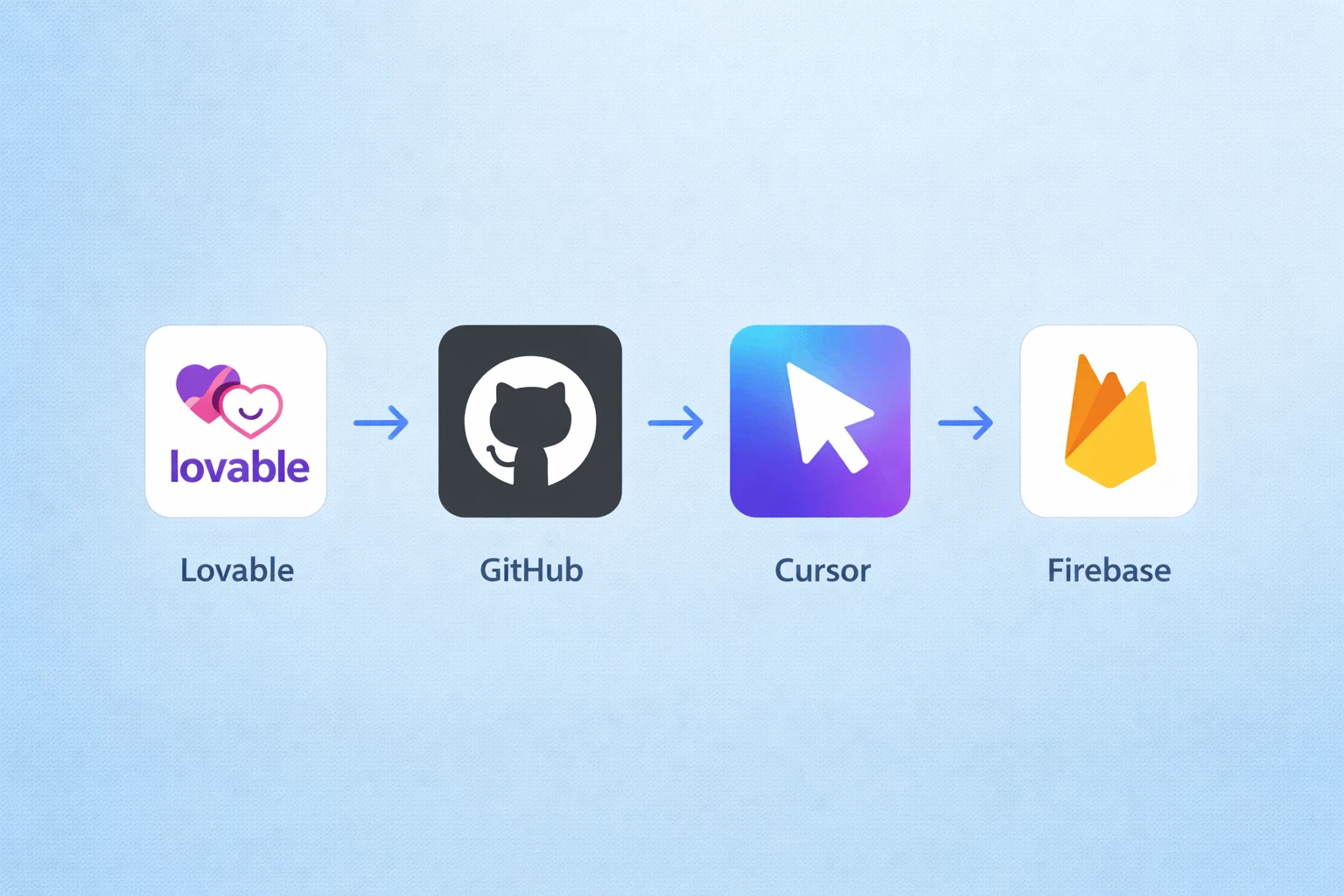
Lovable → GitHub → Cursor → Firebase
That's it. Four tools. One tight loop. Fast feedback. Real output. Question is will it work?
This post is a quick walkthrough of how it works and why we think this model could work for other marketing teams.
Marketing Is Becoming a Build Function
Marketing used to be mostly about messaging.
Now it is also about making.
Landing pages. Solution pages. Interactive demos. Experiments. Micro-sites.
If your team cannot build and iterate quickly, ideas pile up faster than they ship.
So we stopped treating marketing like a request queue and started treating it more like product.
Not in process-heavy ways.
In practical ways.
Step 1: Lovable
Where ideas turn into working pages
Lovable is where we explore and shape experiences.
We describe what we want in plain language.
We iterate in real time.
We focus on structure, layout, and story before worrying about perfect code.
Think of it as a visual playground for product and marketing ideas.
No Figma handoff. No giant specs. No “interpret this screenshot” emails.
Just working surfaces.
Step 2: GitHub
Where ideas become shareable
Once something looks right in Lovable, we push it to GitHub.
Now it is real.
Versioned. Traceable. Collaborative.
Marketing work stops living in screenshots and starts living in source control.
Which sounds boring.
But it changes everything.
Step 3: Cursor
Where engineers make it production-grade
Our engineering team pulls the Lovable-generated code into Cursor.
They refactor. Clean it up. Convert pieces to proper React patterns. Improve performance.
This is not “rewrite from scratch.”
It is “improve what already exists.”
Marketing builds the first 70 percent.
Engineering turns it into a durable 100 percent.
Step 4: Firebase
Where ideas become live
Once reviewed and approved, the work is deployed to Firebase.
No special ceremony. No launch checklist with seventeen steps.
It ships.
Then we watch what happens.
Then we iterate.
Why This Works
1. Speed without chaos
Fast does not mean sloppy. This flow keeps momentum high while preserving engineering standards.
2. Marketing owns outcomes
Marketing is not “requesting pages.” Marketing is building pages. That shift alone unlocks an entirely different level of accountability and creativity.
3. Engineers stay focused
Instead of spending time translating mockups into first drafts, engineers focus on architecture, reliability, and scale. Everyone plays to their strengths.
4. The website becomes a living product
Not a static brochure. Not a quarterly redesign project. A continuously improving surface.
Is This a Headless CMS?
Kind of.
But it feels more like: an agent-assisted publishing system.
Lovable acts like a creative agent.
Cursor acts like a code-quality agent.
GitHub is the connective tissue.
Firebase is the delivery layer.
Content, layout, and experience move through the same pipeline as software. Because increasingly, they are software.
The Bigger Idea
We do not think this workflow is unique.
We think it is early.
Five years from now, it will feel obvious that:
- Marketing builds
- AI ships constantly
Not special. Not impressive. Just normal.
And honestly, that is the goal.
Final Thought
We are not solving diseases. We are not launching rockets.
We are trying to make it dramatically easier to turn ideas into real things.
This workflow helps us do that.
If you are experimenting with similar approaches, we would love to compare notes.