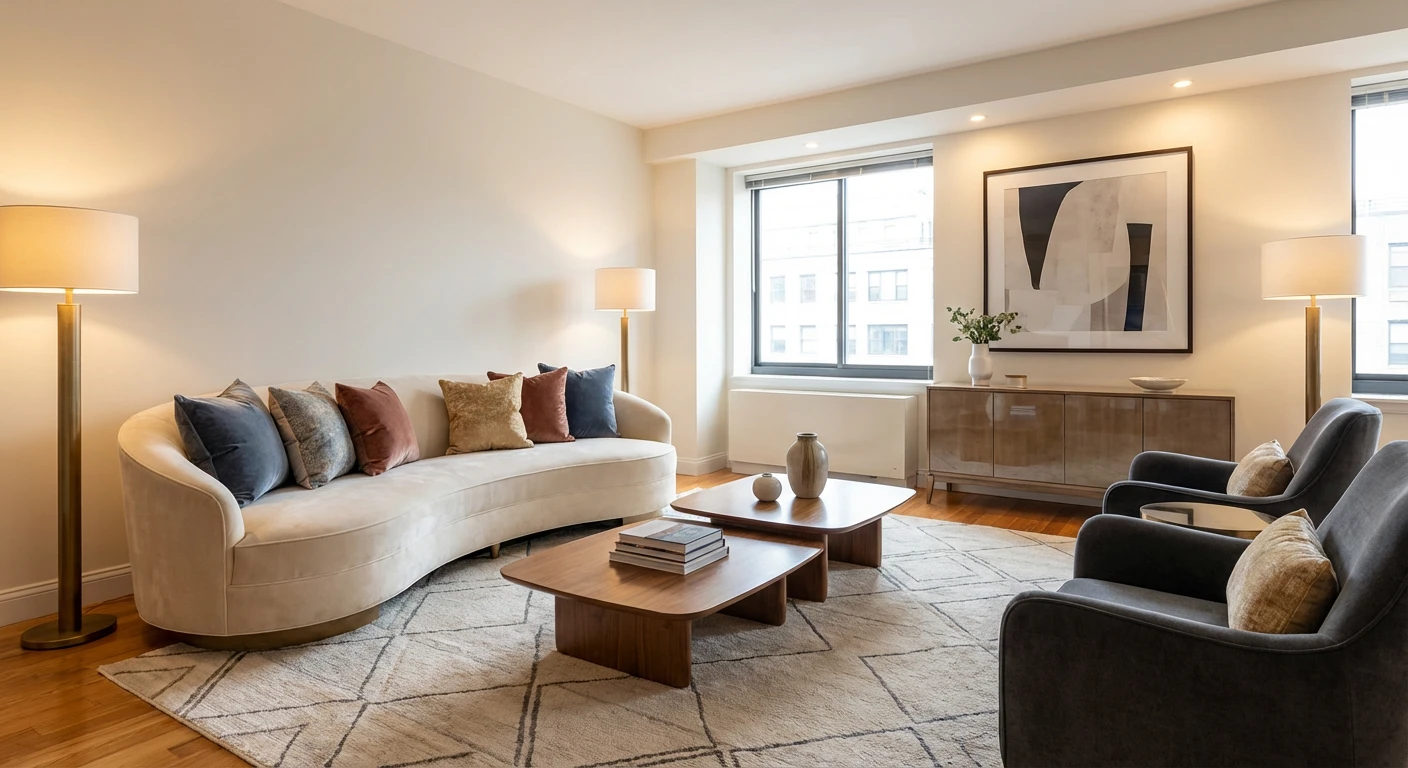
What is Virtual Staging?
Virtual staging is the process of digitally furnishing and decorating empty or outdated property photos using advanced AI and design software. Unlike traditional staging, which requires renting furniture and hiring movers, virtual staging transforms spaces in hours, not days, at a fraction of the cost.
Modern AI-powered virtual staging has evolved far beyond simple furniture placement. Today's technology can reimagine entire rooms, change lighting conditions, and even visualize renovation possibilities, all while maintaining photorealistic quality that buyers trust.
Benefits for Real Estate
The advantages of virtual staging extend throughout the real estate marketing ecosystem:
- Cost Efficiency: Save 90% compared to traditional staging costs
- Speed: Get staged photos back in 24-48 hours instead of weeks
- Flexibility: Show multiple design styles for the same room
- Consistency: Maintain brand-quality visuals across all listings
- Scalability: Stage hundreds of listings without logistical constraints
“Properties with virtual staging receive 40% more online views and sell 73% faster than those with empty room photos.”
How AI Staging Works
AI-powered virtual staging uses deep learning models trained on millions of interior design images to understand spatial relationships, lighting, and aesthetic principles. Here's how the process works:
Step 1: Image Analysis
The AI analyzes your empty room photo, identifying walls, floors, windows, and architectural features. It calculates perspective, lighting direction, and room dimensions to ensure furniture placement looks natural.
Step 2: Style Selection
Choose from design styles that match your target buyer demographic: modern minimalist for urban condos, farmhouse charm for suburban homes, or coastal elegance for waterfront properties.
Step 3: AI Generation
The AI generates photorealistic furniture, decor, and accessories that match the room's lighting and perspective. Shadows, reflections, and textures are calculated to create seamless integration.
Best Practices
To get the most from virtual staging, follow these proven guidelines:
- Start with high-quality, well-lit photos. The AI works best with clear source material
- Remove personal items and clutter before photographing
- Match staging style to your target buyer demographic
- Always disclose that images are virtually staged in your listings
- Include both staged and unstaged photos for transparency
Frequently Asked Questions
Is virtual staging legal?
Yes, virtual staging is completely legal. However, best practices and many jurisdictions require disclosure that photos have been digitally enhanced. Always label virtually staged photos clearly in your listings.
How realistic is AI staging?
Modern AI staging is remarkably realistic. Most buyers cannot distinguish high-quality virtual staging from traditional photography. The key is using professional-grade services that understand lighting, perspective, and design principles.
What file formats are supported?
Most virtual staging platforms accept standard image formats including JPEG, PNG, and HEIC. For best results, upload high-resolution images (at least 2000px on the longest edge) without heavy compression.